Repair or Replace? Front Door Renovation vs. Replacement in Delaware
A drafty front door in Delaware is not always a reason to replace it — and a tired-looking slab is not always worth saving. This guide helps Newark, Wilmington, and coastal homeowners decide when renovation is enough and when replacement is the honest next step.
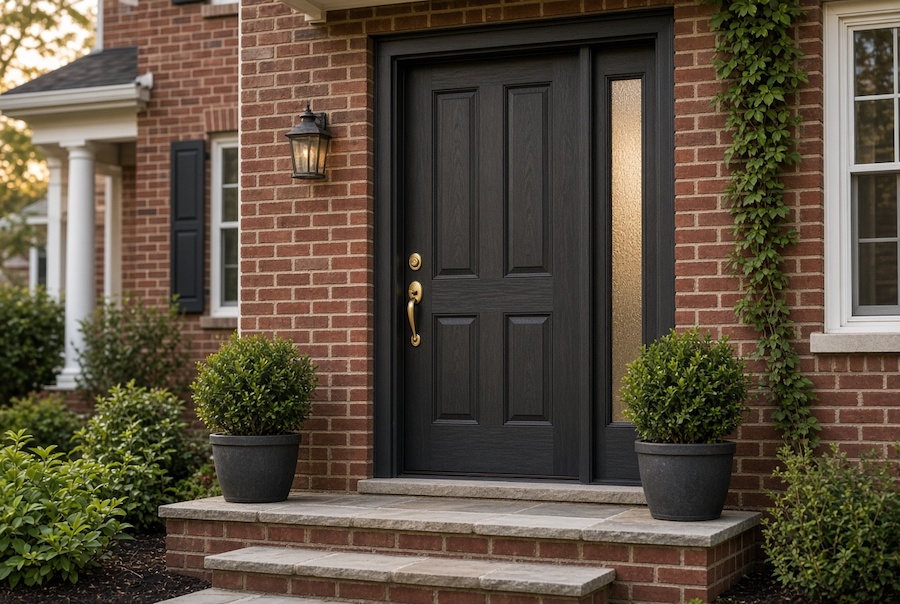
A drafty slab in Wilmington is not always a reason to buy a new door. A swollen rail in Lewes is not always a reason to keep the old one. Delaware homeowners usually arrive at the same question from two directions: Can we refresh this entry, or is it time to replace it?
The answer depends less on how the door looks in a photo and more on the frame, the sill, the weatherstripping, and what Mid-Atlantic weather has already done to the opening.
This is not another cost roundup or another “replace it before winter” reminder. Those pieces already exist. This one is about the decision most Newark, Wilmington, Middletown, and coastal homeowners actually face first: renovation or replacement.
What “door renovation” actually means
Renovation is not a coat of paint and a new knocker. A real front-door refresh in Delaware usually includes some mix of:
- New weatherstripping and a door sweep that still meet the slab
- Threshold and sill work, especially where water sits after a nor’easter
- Hardware and lockset replacement (humidity and salt air chew through cheap finishes)
- Refinishing a wood slab that is still structurally sound
- Tightening or replacing hinges so the door no longer sags into the strike
- Recaulking brick-mold and trim
- Addressing minor frame movement without opening the rough opening
That work can make an older door feel tighter for a few more seasons. It cannot fix rot in the jamb, a slab that has lost its shape, or a steel skin that has started to rust from the inside.
When renovation is enough
Renovation is the honest first step when the door still does its job and the damage is surface-level.
Good candidates for renovation:
- The slab is square and closes cleanly
- Daylight around the door is limited to failed weatherstripping, not a warped panel
- Wood is solid when you press the bottom rail and the sill
- Steel shows scuffs or faded paint, not bubbling rust at the edges
- The lock throws and the deadbolt lines up
- The frame is plumb enough that new seals will actually compress
In inland New Castle County — Newark, Hockessin, Bear, parts of Wilmington — a well-built wood or fiberglass door that has only lost its seals is often worth refreshing. Painting a sound wood door, swapping pitted hardware, and resetting the threshold can restore both look and comfort without touching the rough opening.
If the only complaint is “it looks tired,” start with renovation. If the complaint is “the floor in front of the door is always cold,” look closer.
When replacement is the better call
Delaware weather is hard on entries. Humid summers, freeze-thaw winters, and salt air along the coast do not fail a door all at once. They fail it in layers.
Replacement is usually the cleaner path when two or more of these are true:
- You can see daylight with the door closed and locked
- The slab sticks in August and rattles in October
- The bottom rail is soft, swollen, or delaminating
- Steel is rusting at the skin or around glass
- The frame is out of square and the door cannot be planed back into a reliable seal
- Water has stained the interior floor or the brick-mold is soft
- Hardware binds even after adjustment
- The door is an older hollow or thinly insulated unit that no amount of weatherstripping will make comfortable
A renovation on a failing slab is a short delay. The new paint looks good for a season. Then the same gap returns because the door itself moved.
Coastal Sussex — Lewes, Rehoboth, Dewey, Bethany — is less forgiving. Salt air and year-round humidity punish wood and unfinished steel. There, a “refresh” on a rotting wood door often costs nearly as much as a fiberglass replacement that will not swell the next August.
Delaware specifics that change the decision
Climate is not one climate.
Wilmington and the Brandywine Valley see repeated freeze-thaw. Rehoboth and Lewes see salt and wind. Dover sits in between. A wood door that survives in Hockessin with yearly maintenance may not survive two blocks from the bay.
Older openings are rarely square.
Colonial and early-20th-century houses in Wilmington, New Castle, and parts of Newark often have frames that have settled. Renovation assumes the opening is still a usable rectangle. If it is not, you are not renovating a door. You are fighting the house.
Historic districts add a review step.
In City of Wilmington historic and neighborhood conservation districts, exterior door work that changes design or materials is reviewed. The historic town of New Castle has its own in-kind repair rules. New Castle County generally exempts same-size, same-location door replacement when the structural frame is not altered — but historic overlay zones still need review. Confirm before you assume a simple swap is “just a door.”
Same-size replacement is simpler than a new entryway.
If the opening stays the same and the frame is salvageable, replacement is a contained project. If you want sidelites, a transom, or a wider unit, you are no longer renovating. You are building a new entry.
What holds up after either choice
Material still matters, whether you keep the slab or change it.
- Fiberglass is the practical default for most Delaware houses. It does not absorb summer humidity the way wood does, it does not rust, and wood-look skins fit both Craftsman and colonial fronts.
- Steel is the value and security option inland, provided the finish is intact and the door is not sitting in coastal salt air with chips in the coating.
- Wood still belongs on some traditional and historic elevations, but only if the owner will maintain it. In Sussex County, that is a commitment, not a one-time project.
Renovation does not change the material. If the existing door is the wrong material for the site, refinishing it only postpones the same failure.
What a proper job should include — renovation or replacement
Whether you keep the door or change it, the opening has to work.
A renovation should include a close look at the sill, brick-mold, and interior trim for hidden moisture. New weatherstripping on a rotted jamb is theater.
A replacement should include measuring the actual opening (not the old door), checking the frame and threshold, sealing the new unit, insulating around the jamb, and confirming the slab swings, latches, and weathers out in one visit — not “we’ll caulk that later.”
Quotes should separate the slab, frame or frame repair, glass, hardware, labor, haul-away, and any trim or sill work. Bundled “system” pricing is how extra frame damage disappears until the installer is already on site.
How to decide in one visit
You do not need a living-room pitch to make this call. You need to stand at the door.
- Close it at night and look for light.
- Press the bottom rail and the outside corners of the jamb.
- Open and close it on a humid day and on a dry day if you can.
- Look at the sill after rain.
- Decide whether you like the door enough to keep its shape, or whether the house needs a different one.
If the slab is sound and the look still fits the house, renovate. If the slab has already moved, replace it and spend the renovation money on a unit that will hold a seal through a Delaware winter.
See the door before you commit
Troy Granite’s Newark showroom is set up for the unglamorous version of this decision: look at the slab, match it to the house, then price the opening you actually have.
Newark Troy Granite
711 Interchange Blvd., Newark, DE 19711
(302) 292-1750
Hours: Monday–Friday 9:00 a.m.–5:00 p.m., Saturday 10:00 a.m.–4:00 p.m., Sunday by appointment.
Bring a photo of the existing door and a note about drafts, sticking, or water at the sill. The useful conversation starts there — not with a catalog page.
Frequently asked questions
Can I just refinish my wood front door in Delaware?
Yes, if the wood is solid, the joints are tight, and the door still seals. If the bottom rail is soft or the slab is out of plane, refinishing hides the problem for a season.
Is weatherstripping a renovation or a delay?
If the slab and frame are true, new weatherstripping is a real fix. If you already see a warped panel or a shifted jamb, it is a delay.
Do I need a permit to replace a front door in New Castle County?
Same-size, same-location replacement that does not alter the structural frame is generally on the county’s exempt list. Historic districts in Wilmington and the City of New Castle are different. Check before work starts.
What about homes near the coast?
Treat salt air as a material problem, not a cosmetic one. Wood and chipped steel fail faster in Lewes and Rehoboth than they do in Newark. Fiberglass or a well-coated system is the more durable renovation-or-replace outcome.
Should I renovate now and replace later?
Only if the current door still seals. Paying twice for the same opening is how a “small refresh” becomes the most expensive option.